


Wir freuen uns auf die Zusammenarbeit und beraten Sie gern.

Recycling of critical raw materials such as gallium, indium, and germanium

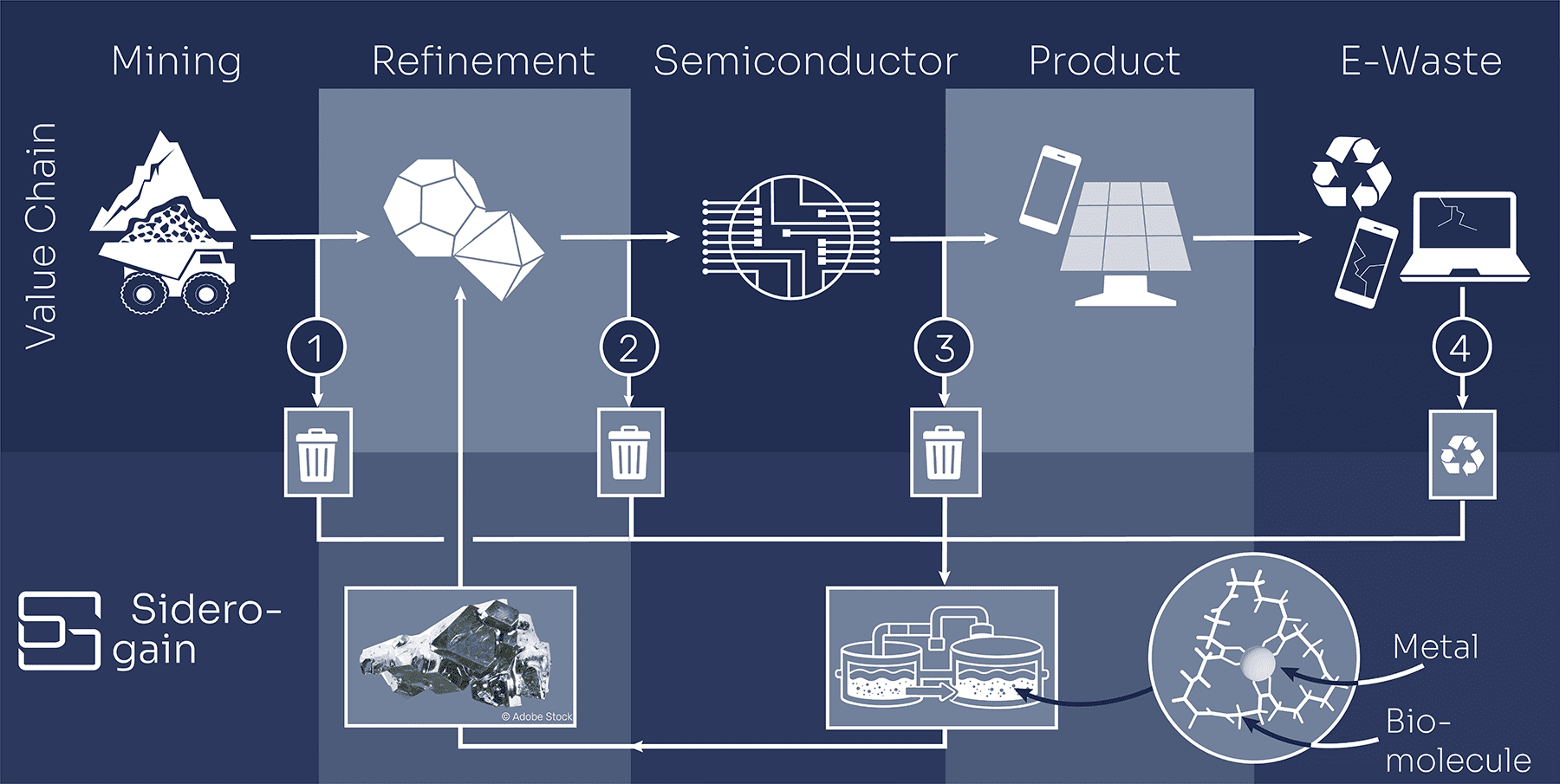
Gallium is a strategically important element and the backbone of the semiconductor industry for applications in mobile data transmission and optoelectronics. It is used in wafers (GaAs, GaN), electronic chips, and optical components such as LEDs and lasers. Efficient recycling technologies are needed to ensure the continued availability of gallium for high-tech applications. The SideroGaIn team at the Helmholtz Institute Freiberg for Resource Technologies (HIF) offers a patented process for recycling metals using biosorption. Biomolecules, known as siderophores, bind to critical metals such as gallium, indium, or germanium and can thus be recovered from wastewater—for example, from wafer production—at nearly 100 percent.

value chain Ga-1800pxV3
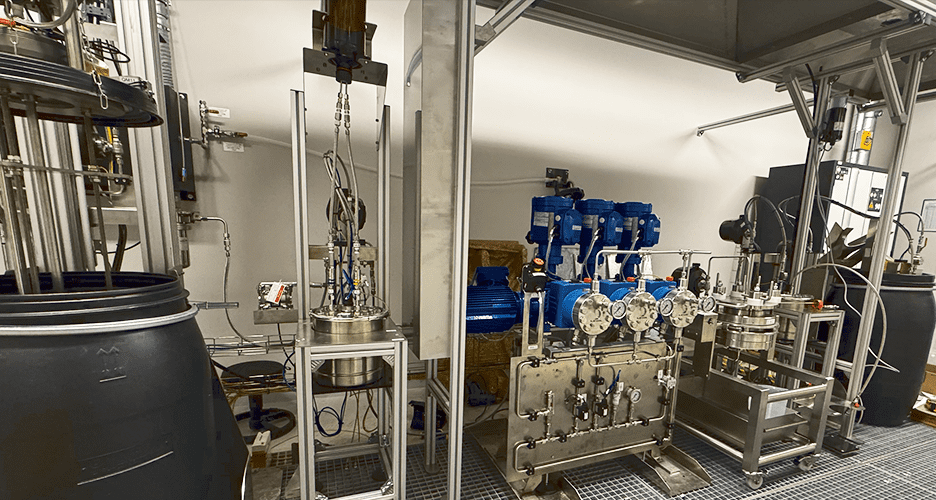
pilot-plant-siderogain-web

Pilot Plant in Freiberg

The SideroGaIn team commissioned a pilot plant at the semiconductor company Freiberger Compound Materials (FCM) in the fall of 2025. It is already capable of processing up to 2000 liters of wastewater per day. Gallium recovery is therefore now possible in a sustainable manner and at competitive costs. Scalability and cost-effectiveness of the innovative recycling process are under investigations in current campaigns.

Manufacturing companies in the high-tech industry typically generate a significant amount of wastewater per day. In the German high-tech sector alone, recycling wastewater could save ca. two tons of gallium per year, thereby reducing dependence on imports.


icon_teaser_forschung_red

Benefits of Siderophore-Based Metal Recovery

  • Economically competitive: This biotechnological process enables the recovery of gallium and other critical metals at competitive prices. SideroGaIn offers an economically attractive alternative to primary raw material extraction.
  • Sustainable and innovative: SideroGaIn uses biomolecules instead of conventional chemicals. Imitating natural process makes the approach particularly selective and environmentally friendly.
  • Reusable: Biomolecules (siderophores) are reusable over many cycles without losing their functionality, which reduces resource and chemical consumption.
icon_teaser_contact_red137

Want to learn more? Let's get in touch!

Technology Development

Dr. Rohan Jain

Phone: +49 351 260 2725

Business Development

Dr. Jonathan Engelhardt

Phone: +49 351 260 2710


siderogain@hzdri.de